"There is so much writing in English on Japanese cinema that can't be accepted at face value — not because the writers are careless, but because the differences in culture and language are just too intricate. When I see August Ragone's name on a piece of writing, it gives me permission to place my faith in it completely. Among Japanese fantasy film historians, he's the best working in English." —Tim Lucas, Video Watchdog

Showing posts with label Akira Takarada. Show all posts

Tuesday, November 29, 2016

FROM FIRST "GODZILLA" TO NEW "STAR WARS"
Akira Takarada Goes to a Galaxy Far, Far Away!

旧ゴジラ俳優・宝田明、アニメ『スター・ウォーズ』に声の出演


The star of the original GODZILLA performing "Bendu" for REBELS.

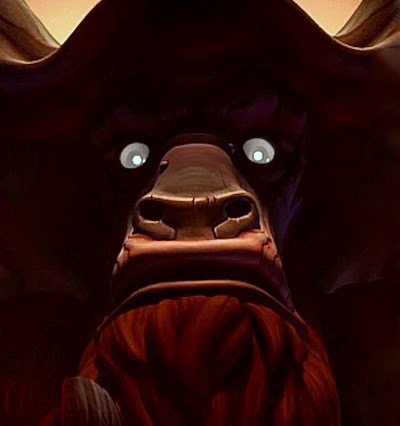
Toho's top leading man of the '60s, Akira Takarada, has joined the Japanese voice cast of STAR WARS: REBELS! Starting with the third season, premiering on December 11th in Japan, Mr. Takarada can be heard intoning the character of "Bendu". In the English-language version, the imposing creature is played by Tom Baker of "Doctor Who" fame.


Tom Baker, best known as the Fourth Doctor, in a recent photo.

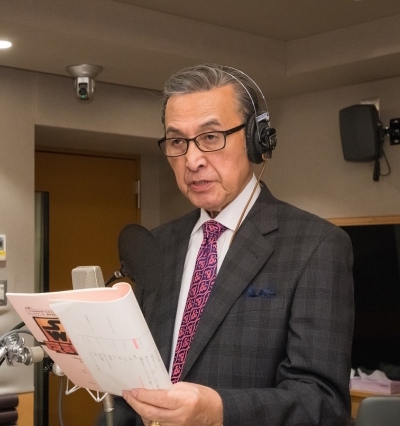
After recording, Mr. Takarada said, "Bendu is like a merciful father, so I felt like a good guy, but I had to remind myself to speak to Kanan [Jarrus] right from the bottom of my heart. After recording for eight hours, I felt as though it was a tough job, especially after such a long absence [from voice acting]. But it was very fulfilling." Previously, Mr. Takarada played "Jafar" for the Japanese-language version of Disney's "Aladdin", released in 1993.


Bendu of Atollon, a being who exists at the center of the Force.

Ecstatic was the reaction from REBELS producer-director [and diehard Godzilla fan] Dave Filoni, "Godzilla and Star Wars are both beloved in fans' hearts around the world, and are both similar in that respect. I was really happy to hear that Mr. Takarada was cast, then got to see him recording, which was amazing. The character was magnificently expressed by his voice, and I'm extremely satisfied with the results." Filoni suggested Takarada for the role in the first place.

Dave_Filoni
Yes, REBELS producer-director Dave Filoni loves him some Godzilla.

STAR WARS: REBELS is broadcast nationwide in Japan on Disney XD, over Cable and Satellite Cable, Saturdays at 1:00 pm, with an encore broadcast on Sundays at 1:00 pm.

Original article published November 30, 2016 on Oricon Style (Japan Time), translated by August Ragone.

Sunday, November 2, 2014

HAPPY 60th ANNIVERSARY, GODZILLA!
King of Monsters Debuted on November 3, 1954

ゴジラ生誕60年のアニバーサリー !


You're not getting older, Big G — you're getting better!

Has it really been 60 years since Godzilla was loosened upon the world? I remember when the Big G turned 25 in 1979, and since I was born long after 1954, it felt like he had been around an eternity from my young perspective. There was no time before him from my frame of reference. I grew up with Godzilla and he was already eternal. Little did we know that when I was growing up, Godzilla’s time was nigh; the first cycle of films that started in 1954 would be winding down by 1975. How could Godzilla not continue? His popularity in the US was at an all-time high — we still hadn’t gotten any of the films following GODZILLA VS. HEDORAH (1971) — he dominated local television, the pages of Famous Monsters and The Monster Times, and our thoughts.

As young Godzilla freaks, we drew pictures, created new monsters, and played with his toys (or made our own from dinosaurs figures) — even using the Aurora plastic model kit — but if you were lucky to live in Hawaii or California, you could buy what the kids in Japan had: 8” tall, soft vinyl “monster dolls” (we used to call them) with the iconic “Bullmark” logo branded on the bottom of their feet. As some of us got older, and remained fans, we organized, we started fan clubs, newsletters, fanzines, and hosted screenings. I was lucky to be retained as the “Godzilla/Japanese Film Expert” for our local horror host, Bob Wilkins, who had me talk about these films and television series on his shows, “Creature Features” and “Captain Cosmic,” thus pushing me in this direction.

The later films came, starting with GODZILLA VS. MEGALON in 1976 (our nation’s bicentennial), and his fans were legion, making the film a box office hit: There was no doubt that the Big G was the "King of the Monsters." Until the summer of 1977. STAR WARS exploded box office records around the world and Godzilla became an old hat, “So, 'last year.'” Even so, I — and others like me across North America — didn’t give up on our mon-star. Long before the Internet, we kept in contact through letters, fanzines, and phone calls. Still, even though Godzilla had been popular, he was looked down upon by many people — whether it was by those who still had a grudge against Japan or science fiction fans who saw the films as subpar — and so those of us who remained loyal, also had to be fiercely protective (not defensive) of the character and the films.

There were promises of revival movies that never materialized: “The Resurrection of Godzilla,” “Godzilla vs. the Devil,” and several US attempts, including a semi-remake, “Godzilla, King of the Monsters! 3D” (written by Fred Dekker and to be helmed by Steve Miner, which was more Gorgo than Godzilla). Finally, by the swelling nostalgic popularity at home, with record merchandise and home video sales, Toho announced an all-new Godzilla for 1984… It was a tenuous return, but one that would eventually spawn another thirteen films over the next two decades. In the 1990s, a new generation of US fans discovered the Big G and loved him. Old Timers discovered these new films, and new fanzines sprung up, as well as several conventions devoted to kaiju eiga.

This brave new fandom did not fade away, it has become stronger through cable and home video, the web, events and social networks. This has also grown to be embraced by those who just love monster movies and fantastic cinema — unscathed by the Roland Emmerich debacle — the reception to both editions of my book, “Eiji Tsuburaya: Master of Monsters” (Chronicle Books) has been phenomenal. New comic books, following in the footstomps those of the ‘70s and ‘90s, have taken off with a new, rabid following. And this summer's megabucks spectacle from Gareth Edwards won hearts and minds across the globe.

Everyone seems to have gone gaga for Godzilla. The Big G, kith and kin, have finally become “cool” (but we knew that already). After all, not only is Godzilla the first and greatest true kaiju ever to grace a motion picture screen, he is the one and true "King of the Monsters" — long live the king!

Dedicated to the memory of my childhood pal, Eric Worth
Thursday, June 5, 2014

UNVEILING TOHO STUDIOS' "GODZILLA" MURAL!
Hosted by Gareth Edwards and Akira Takarada

東宝スタジオのゴジラ巨大壁画が初お披露目 !


The 11-meter mural unveiled by Takarada and Edwards this morning.

Following up on my May 11th report on Toho's new mural, there was an official "unveiling" this past morning at the studios with the star of the first Godzilla film, Akira Takarada, and the director of the latest film, Gareth Edwards, acting as the "hosts" dressed up in special Big G happi coats. Interestingly, the mural was not originally intended to celebrate Godzilla's 60th Anniversary this year.


Reunited for the first time since the production of GODZILLA (2014).

Painted by Masao Hanawa, the mural was commissioned to go along with similar murals featuring scenes from Ishiro Honda's MOTHRA (1961) and Akira Kurosawa's SEVEN SAMURAI (1954), while the aging Toho Studios was undergoing numerous renovations, major facelifts, and upgrades to the studio grounds and buildings, which had been constructed, originally, in the 1930s.


Edwards, director of GODZILLA (2014), called the mural, "fantastic."

But, in the wake of the Tohoku Earthquake and Tsunami of 2011, work was postponed on the proposed Godzilla mural. So, in light of the 60th Anniversary and the release of the Edwards' production, Toho brought back Hanawa to move forward on the project. The famed painter not only created the SEVEN SAMURAI mural, but was also the art director of Tokyo DisneySea Resort.


Takarada's opinion of Hanawa's work was, "Subarashii" (wonderful)!

Using the 1994 Big G as his model, featured in Kensho Yamashita's GODZILLA VS. SPACE GODZILLA, the mural reportedly took three months to complete at the cost ¥8,000,000 (roughly $78,000 USD). Completed on May 31st, Godzilla will now stand over the front gates of Toho Studios into the foreseeable future — hopefully, where he continues to reign as the once and future King of the Monsters.


Click to watch Masao Hanawa at work on the Godzilla mural.

Photo source: Oricon News Inc. & Asahi.com

Thursday, August 7, 2008

「ゴジラ • エビラ • モスラ 南海の大決闘」 GODZILLA VS. THE SEA MONSTER (1966)


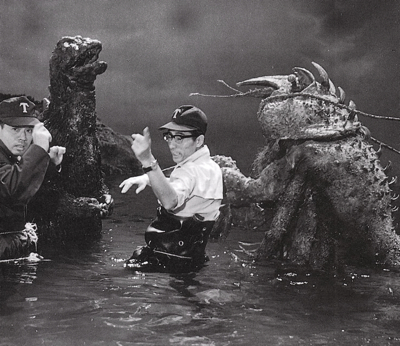
Sadamasa Arikawa (center) directing Haruo Nakajima (as Godzilla) and Hiroshi Sekita (as Ebirah).

GODZILLA VS. THE SEA MONSTER
Gojira-Ebira-Mosura Nankai-no Daiketto, 1966, 87 minutes
Director JUN FUKUDA • Visual Effects SADAMASA ARIKAWA • Visual Effects Supervisor EIJI TSUBURAYA

In 1965, there was a big change in the Visual Effects Department at Toho, with contracts ending and Tsuburaya pulling people and resources over to his own effects company, Tsuburaya Productions. Since he was spending so much time at his own studio, Tsuburaya chose his cinematographer, Sadamasa Arikawa, to divide chores as Visual Effects supervisors. Since Honda and Tsuburaya were busy with international co-productions (such as THE WAR OF THE GARGANTUAS), Tanaka handed the next Godzilla project over to popular action film director Jun Fukuda, who previously helmed the sci-fi thriller SECRET OF THE TELEGIAN (1960) and the colorful action-comedy 100 SHOT/100 KILLED (1965).

America's Rankin/Bass Productions, famous for its puppet animated television specials produced in Japan (such as "Rudolph the Red-Nosed Reindeer"), was shopping studios to take on a live-action feature film, based on their KING KONG cartoon series, produced by Toei Animation. The first screenplay, penned by Shinichi Sekizawa ("King Kong vs. Ebirah: Operation Robinson-Crusoe"), was rejected, but as negotiations continued, writers were put to work to submit further treatments which were offered to Rankin/Bass (eventually becoming KING KONG ESCAPES in 1967). While Toho was busy creating new monster films, such as THE WAR OF THE GARGANTUAS, there were no Godzilla projects on the boards for 1966,

The general consensus was that the Godzilla series needed a fresh direction, the relatively new medium of television was also keeping people away from theaters, so Tanaka thought that it was time to go after the teenage market with the same very same formula that made films such as the YOUNG GUY (starring Yuzo Kayama) so popular. There was also a very trendy interest in the exotic tropics, Hawaii and the South Seas, reflected in Japanese pop songs and movies of the early-to-mid-1960s. Tanaka thought that this could be exploited with the rejected screenplay for "King Kong vs. Ebirah," which incorporated these elements perfectly. Tanaka ordered the project into production, substituting Godzilla for King Kong, in a slightly revised screenplay entitled "Godzilla-Ebirah-Mothra: Big Duel in the South Seas."

The cast was top-lined by leading man Akira Takarada, the biggest box-office draw at the studio, playing the is-he-isn't-he master thief, who adds a worldly presence to the mostly youth cast. As the beautiful escapee, 29 year-old Mizuno was a last-minute marquee-value replacement for 19 year-old Starlet Noriko Takahashi (the dancing girl in FRANKENSTEIN CONQUERS THE WORLD), who originally was cast in the part, but fell ill due to acute appendicitis during principal photography. The driving electric guitar and jazz-infused soundtrack was composed by Masaru Sato (YOJIMBO) scoring his second Godzilla film (the first was GODZILLA RAIDS AGAIN in 1955) was quite a departure from Akira Ifukube’s bombastic marches. The lush photography was in the hands of Kazuo Yamada, who shot the majority of Hiroshi Inagaki’s memorable films, including CHUNSHINGURA (1962).

Fukuda approached this as pure escapism, with a fast-paced story that also weaves in Youth Movie elements with James Bondian histrionics — Takarada's hot-headed safecracker, a sinister organization bent on world domination through nuclear proliferation, and a band of teenagers swept up into the action, with whom the target audience could indentify. It is quite apparent that little was revised in the changing of the central monster from Kong to Godzilla, because of the odd Kong-like ticks adopted by Godzilla — his attention directed at a beautiful woman, his battles with a Giant Condor and a Jet Squadron, his boulder-throwing antics, and the rubbing of his nose (ala Kayama's character in the aforementioned YOUNG GUY series). The colorful film is an unusual, but highly enjoyable, adventure — despite its relatively lower budget — and is one of the most underrated of the 1960s entries.

(It's also the only Godzilla film to open with a Go-Go Contest!)


Executive Producer TOMOYUKI TANAKA Screenplay SHINICHI SEKIZAWA Production Design TAKEO KITA Cinematographer KAZUO YAMADA Film Editor RYOHEI FUJII Music MASARU SATO Visual Effects Production Design YOSHIYUKI INOUE Visual Effects Photography SOKEI TOMIOKA and YOICHI MANODA

AKIRA TAKARADA (Yoshimura) KUMI MIZUNO (Dayo) TORU WATANABE (Ryota) TORU IBUKI (Yatta) CHOTARO TOGIN (Ichino) HIDEO TSUNAZUKA (Niita) JUN TAZAKI (Outpost Commander) AKIHIKO HIRATA (Captain Dragonpatch) HISAYA ITO (Nuclear Physicist) HIDEYO AMAMOTO (Ship Captain) CHIEKO NAKAKITA (Kane, Ryota and Yatta's Mother) FUMIKO HONMA (Shinto Medium) IKIO SAWAMURA (Old Infant Islander) and THE BAMBI PAIR (The Little Beauties)